How Secure Dog Fields Help Reactive & Nervous Dogs Thrive 🐾
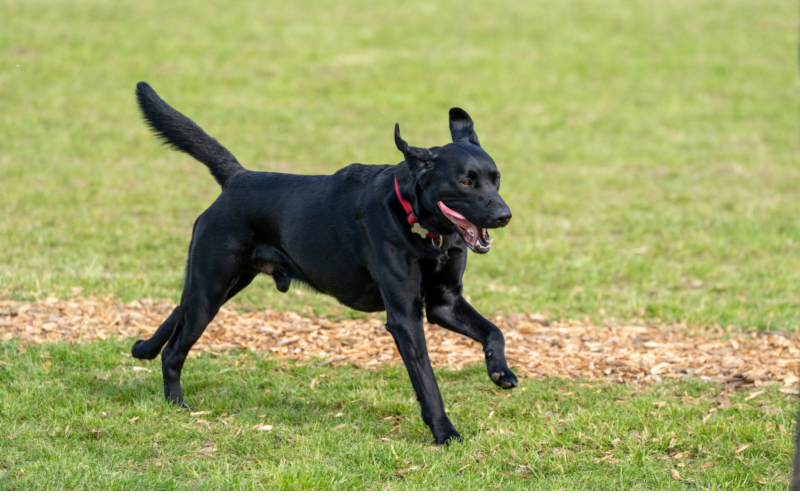
For reactive or nervous dogs, a secure dog field can be a game-changer. It gives them space to move, sniff, and relax without the pressure of unpredictable encounters, helping to lower stress levels and build more positive outdoor experiences, one calm visit at a time.
If you own a reactive or anxious dog, you will know the particular exhaustion of the daily walk. The constant scanning ahead. The split-second decisions when another dog appears on the horizon. The tight lead, the held breath, the apologies to passing strangers. What should be the best part of a dog’s day can become one of the most stressful for dog and owner alike. And the frustrating truth is that the more often a dog rehearses that stressed response, the more deeply embedded it becomes.
The Driven Dog Substack is a reader-supported publication. To receive new posts and support my work, consider becoming a free or paid subscriber.
Secure dog fields offer something different — a controlled, predictable environment where many of those triggers simply aren’t present. The result is a dog who can breathe out, decompress, and remember what it feels like to just be a dog. And over time, those experiences begin to add up.
01 — THE PROBLEM
Why Reactive Dogs Struggle in Open Spaces?
Many reactive dogs find everyday walks overwhelming because they cannot control the distance between themselves and their triggers, whether that’s other dogs, unfamiliar people, cyclists, or sudden noises. In a public park, those encounters are essentially random. Your dog has no way of knowing what’s coming next, and that unpredictability is itself a significant source of stress.
When a dog is repeatedly exposed to things that make them uneasy, and repeatedly reacts to them, they are essentially practising that reaction over and over again. The brain reinforces what it rehearses. Without a change in environment, breaking that pattern is incredibly difficult, no matter how hard the owner works on training.
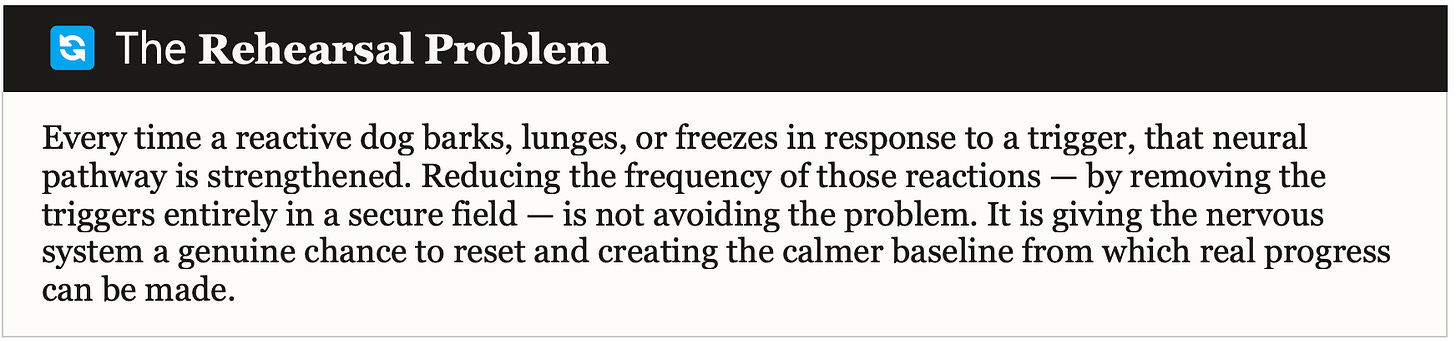
A secure field removes many of those surprises entirely. For the duration of the session, your dog knows exactly what the environment contains. That predictability is not a small thing for an anxious dog — it is the foundation of genuine relaxation.
02 — SAFETY & CALM
The Value of Feeling Truly Safe
Dogs need a sense of safety to relax, and that need is especially pronounced in anxious or reactive dogs. Just as we understand that people need to feel safe before they can learn, explore, or open up, the same is true for dogs. A dog whose nervous system is in a constant state of low-level alert cannot truly rest, play, or engage with the world around them.
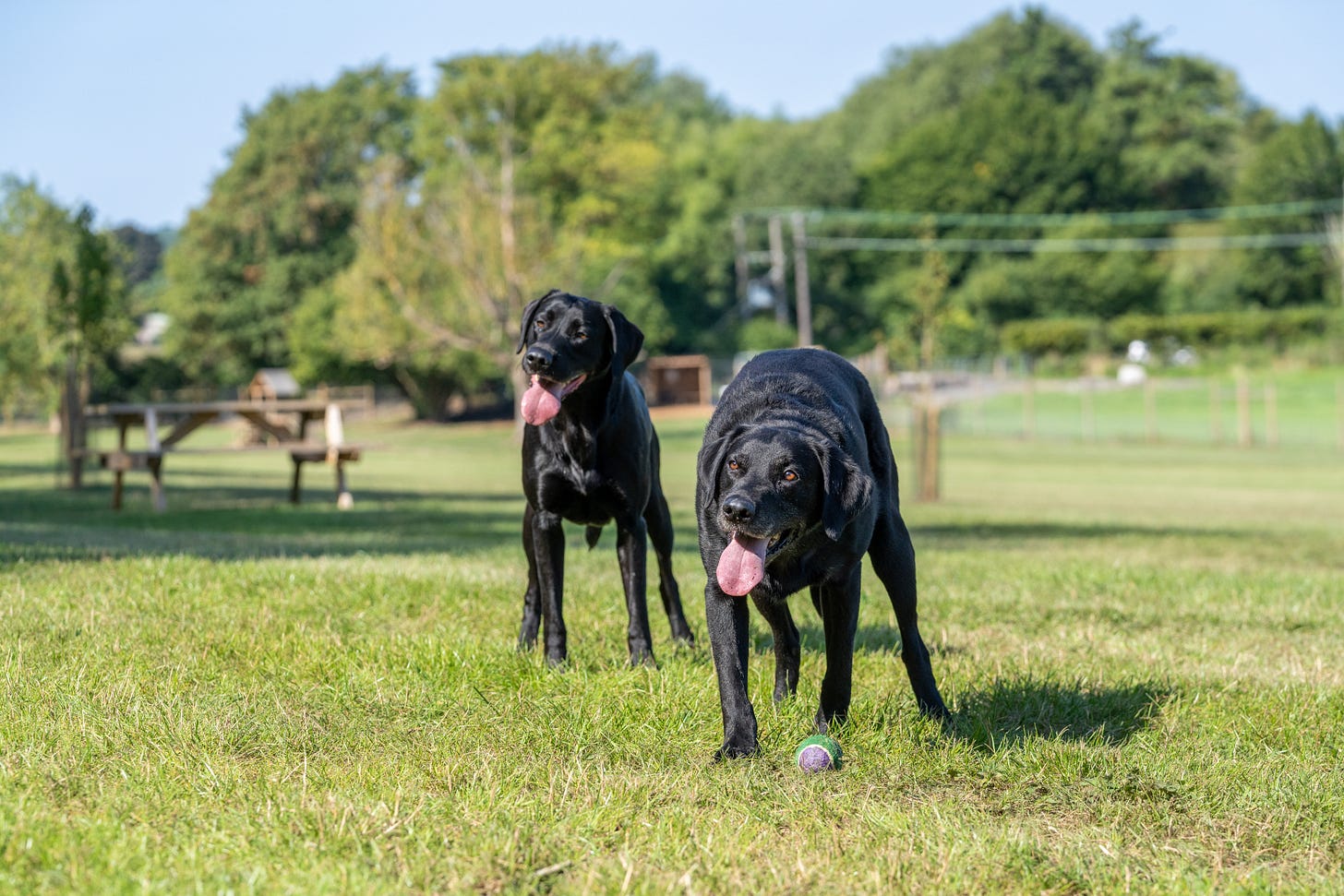
Dogs Trust highlights that dogs benefit enormously from having a space — whether indoors or outdoors, that is predictable, calm, and free from the things that unsettle them. A secure field provides exactly that, but in the outdoor context where many anxious dogs are at their most stressed. Inside a well-maintained, privately hired field, your dog knows the boundaries of their world for that hour. No unexpected arrivals. No sudden intrusions. Just space, safety, and you.
A dog who feels safe is a dog who can finally start to heal. Safety isn’t the end goal — but without it, nothing else is possible.
That sense of safety has a cumulative effect. Visit by visit, a nervous dog begins to associate outdoor time with calm rather than threat. That is not a small thing — for many reactive dogs, it is the first step toward a genuinely different relationship with the outside world.
03 — SNIFFING & DECOMPRESSION
Sniffing, Exploring & the Power of Decompression
One of the most profound and most under appreciated — benefits of a secure field is the space it gives a dog to sniff and explore entirely on their own terms. In a world that often moves too fast for anxious dogs, being able to set the pace is deeply regulating.
Scent-based activities are especially rewarding for dogs because they tap directly into instinctive searching behaviour. When a dog sniffs, their heart rate drops and their nervous system begins to settle. A quiet field — with no lead tensions, no approaching strangers, no sudden sounds — is the ideal environment for this kind of decompression to happen naturally, without any formal training or games required.
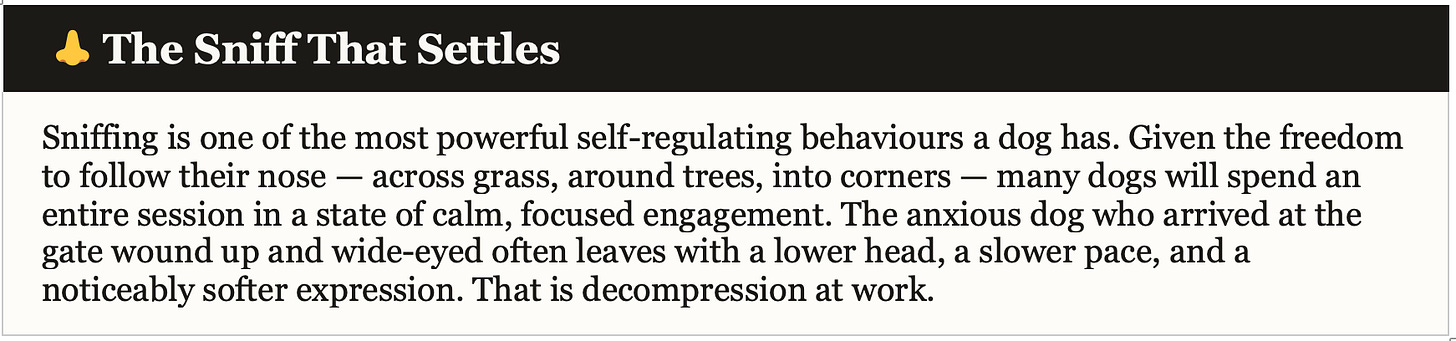
Rolling in the grass, wandering without direction, choosing where to go next — these small acts of freedom matter enormously to dogs who spend most of their time managing their responses to an unpredictable world. A secure field hands them back a sense of agency, and that alone can make the hours and days that follow noticeably calmer.

04 — TRAINING
A Optional Place to Train
Secure fields are also exceptionally useful for training work with reactive or nervous dogs, not because the field replaces the real world, but because it gives dog and handler the conditions they need to make progress.
Training in a state of high arousal is largely ineffective. A dog who is scanning for threats, whose nervous system is already activated, cannot take in and process new information reliably. In a calm, enclosed space with no unexpected triggers, that arousal level drops, and suddenly the dog is genuinely able to engage. Recall becomes possible. Eye contact becomes possible. The basic building blocks of a calmer, more responsive dog become possible.
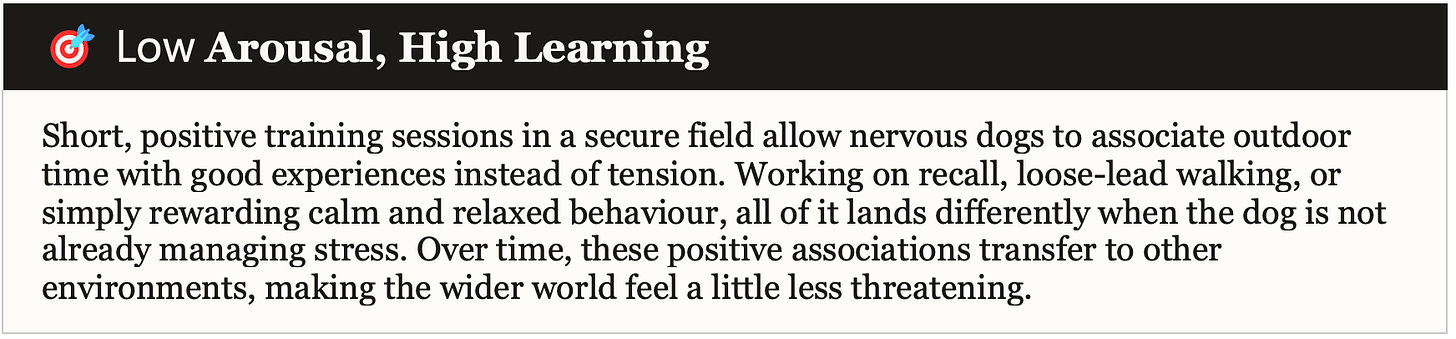
The key is to keep sessions gentle and rewarding, especially in the early visits. Let the field do the work first — allow your dog to decompress, to sniff, to settle, before introducing any training goals. A relaxed dog is a learning dog.
05 — WHO BENEFITS
Who Benefits Most from a Secure Field
Reactive dogs are the most obvious candidates — but they are far from the only ones who find a secure field genuinely valuable. Any dog who finds public spaces overwhelming, unpredictable, or simply too much can benefit from the calm and consistency a private field provides.
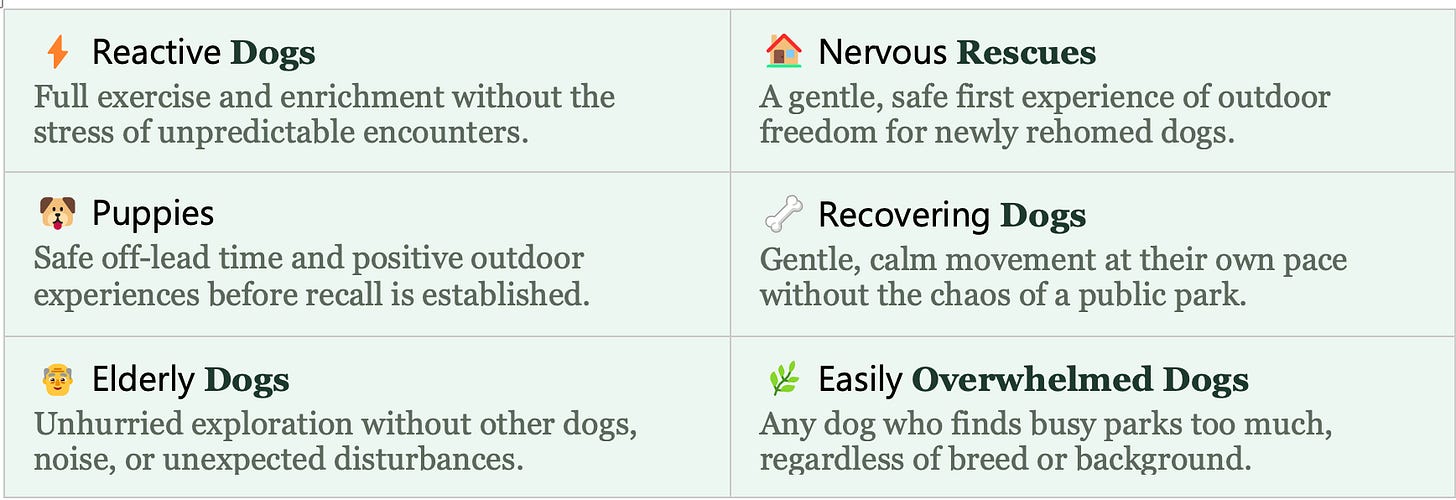
Even confident, well-socialised dogs benefit from the freedom of an enclosed space. But for sensitive dogs, that space isn’t just enjoyable — it can feel genuinely transformative.
06 — MAKING THE MOST OF A VISIT
How to Get the Most From Your First Few Visits
For nervous dogs especially, the approach to the first few field sessions matters. The temptation is to fill the time with games and training, but for many anxious dogs, the most valuable thing you can offer in those early visits is simply the experience of calm.
- Keep it simple at first. Let your dog enter the field and sniff without any agenda. Resist the urge to direct them or call them back repeatedly. Let them lead.
- Sit down. Your body language matters. A handler who sits on the grass communicates calm and safety. Your dog will notice, and it will help them settle.
- Avoid overloading with games or training. Save structured activities for when your dog is already relaxed. In early sessions, focus on decompression first.
- Reward calm, not just performance. Mark and treat moments when your dog is simply relaxed, sniffing, moving slowly, lying down. That behaviour is worth reinforcing.
- Visit regularly. The cumulative effect of repeated calm visits is significant. One good session is lovely; ten good sessions over a few weeks begins to change the pattern.

07 — THE BIGGER PICTURE
A Small Change With a Lasting Impact
Living with a reactive or nervous dog can feel isolating. The walks that should be joyful often aren’t. The freedom other dogs seem to have can feel impossibly out of reach. But it doesn’t have to stay that way — and often, the change begins not with a new training programme or a specialist referral, but with simply giving your dog a different experience.
A secure field gives a nervous dog the thing they need most and receive least: a break from the pressure of the world. Space to breathe. Permission to just be. And in that space, something often begins to shift — quietly, gradually, but genuinely. The dog who arrived tense starts to arrive a little lighter. The dog who could never settle begins to lie down in the sun. The dog who had forgotten what play felt like remembers.
That is what a secure field can do. Not a cure, not a quick fix — but a steady, consistent source of calm that builds over time into something real. For a reactive dog, that is not a small thing. It is everything.
Your dog deserves a chance to breathe. Give them somewhere that they can.
 Kav
Kav